Ambassador Talks with H.E. Ryuichi Hirano: "Overview of the International Situation and Outlook for Japan’s Diplomacy"
May 11, 2026
Ìý

Ìý
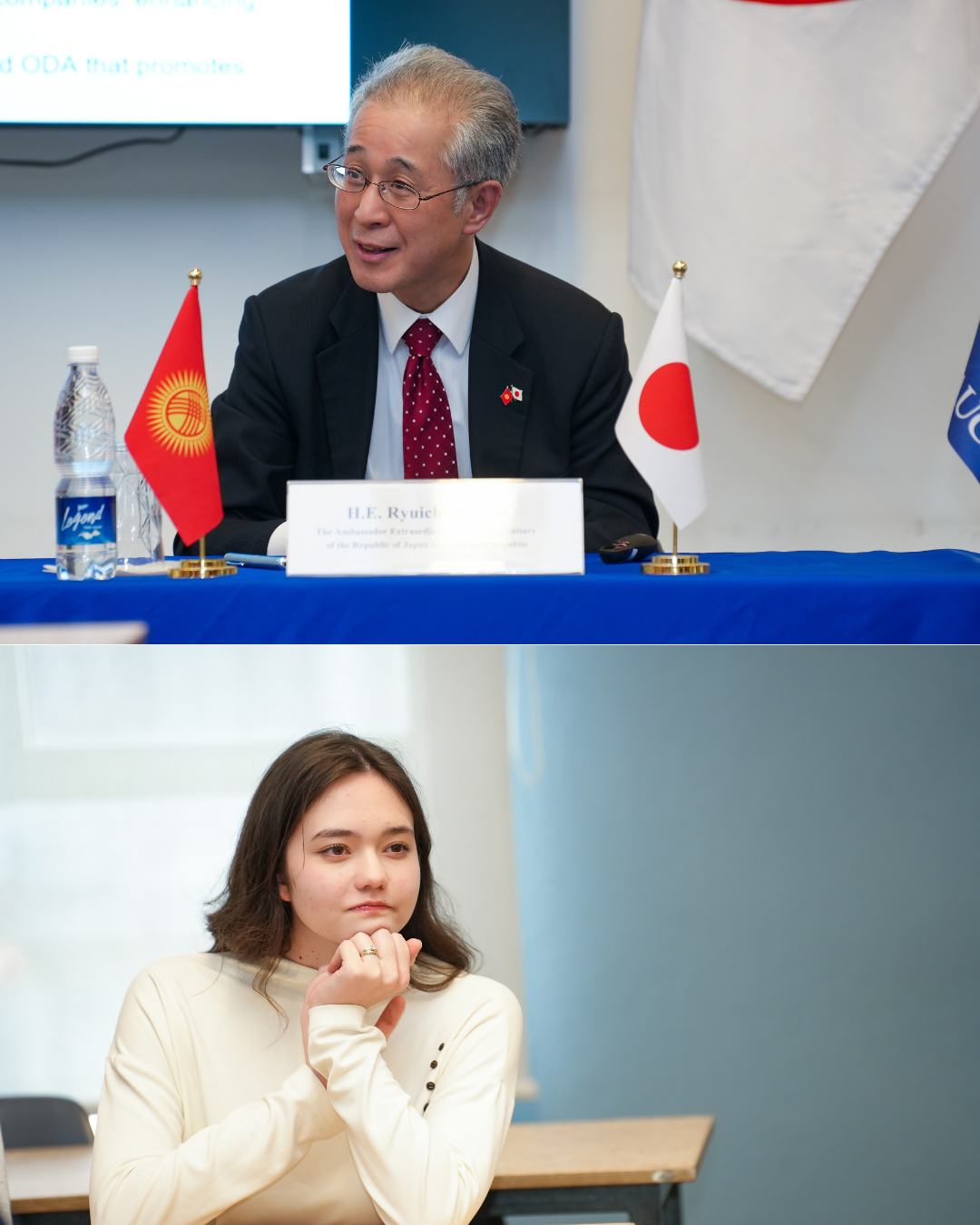
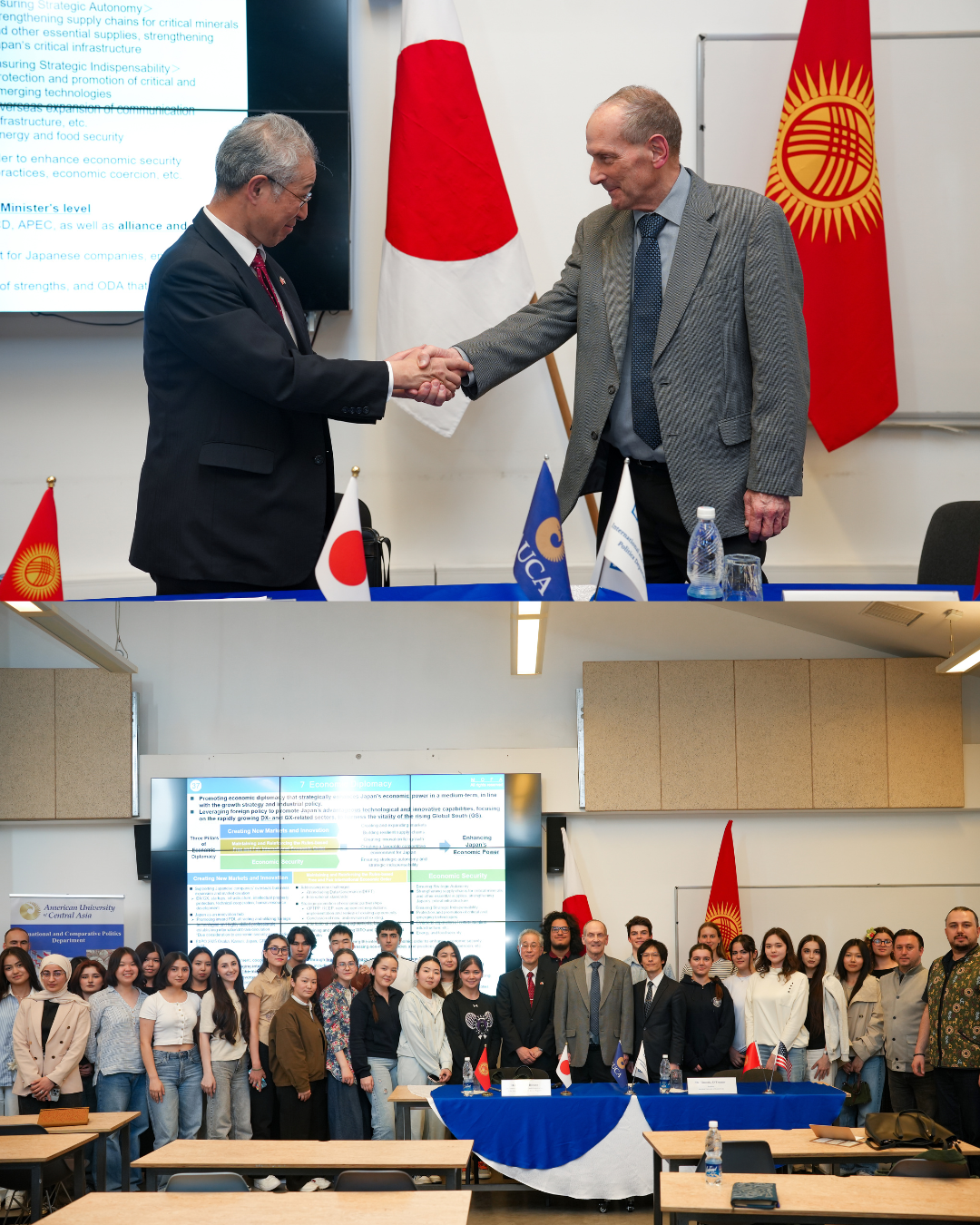
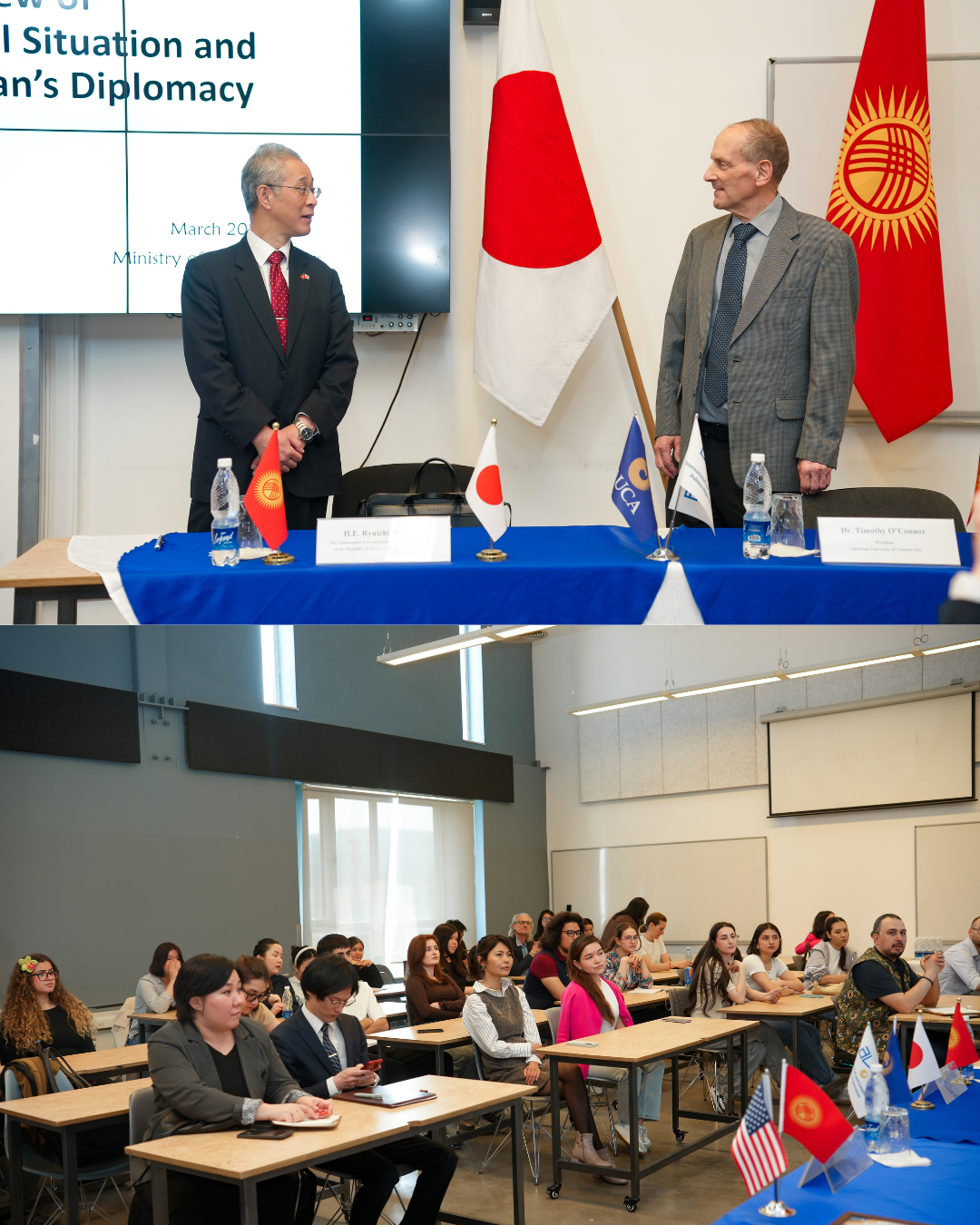
President of ÂÌñ»»ÆÞ, Timothy O'Connor welcomed Japanese Ambassador H.E. Ryuichi Hirano to campus on April 24, as part of ÂÌñ»»ÆÞ's ongoing Ambassador Talks series aloong with International and Comparative Department — a platform that has brought senior diplomats and international figures to the university for open dialogue with students and faculty.
The event featured a comprehensive presentation by Japan's Ministry of Foreign Affairs on the current international situation and Tokyo's diplomatic priorities — and the message was clear: the world has changed, and diplomacy must change with it.
According to MOFA, the international community is at a genuine turning point. The relative stability that followed the end of the Cold War — built on economic globalisation and growing interdependence — has broken down. Ìý"The challenge will be to build global governance in which all countries share responsibility," the presentation noted, acknowledging the deep divisions now running through international institutions.
At the same time, the rise of the Global South is reshaping who has a voice in global affairs. Emerging and developing countries are increasingly assertive, and not all of them share the same vision of international order that Japan and its partners have long championed.
One of the more striking aspects of the presentation was its broad definition of security. Beyond military threats, Japan now considers supply chain resilience, advanced technologies, cybersecurity, and disinformation as core security concerns — reflecting a reality that most countries, including Kyrgyzstan, are navigating daily.
Cultural diplomacy and people-to-people exchanges are also high on the agenda — and this is where Kyrgyzstan fits in directly. Ambassador Hirano spoke candidly about the bilateral relationship. Japan's development cooperation in Kyrgyzstan — through ODA and JICA programmes — continues to support infrastructure and institutional development, with new projects in the pipeline.
Both countries, interestingly, share a demographic challenge. Japan is grappling with an ageing and shrinking population, while Kyrgyzstan faces emigration pressures and the task of creating opportunities for a young and growing workforce. This common ground, the Ambassador suggested, creates real space for meaningful exchange.
Obstacles to deeper cooperation exist, of course. Geographic distance, modest trade volumes, and Kyrgyzstan's delicate balancing act between major regional powers all complicate the relationship. But Ambassador Hirano was optimistic, pointing to sustained Japanese engagement with Central Asia as evidence of long-term commitment rather than short-term interest.
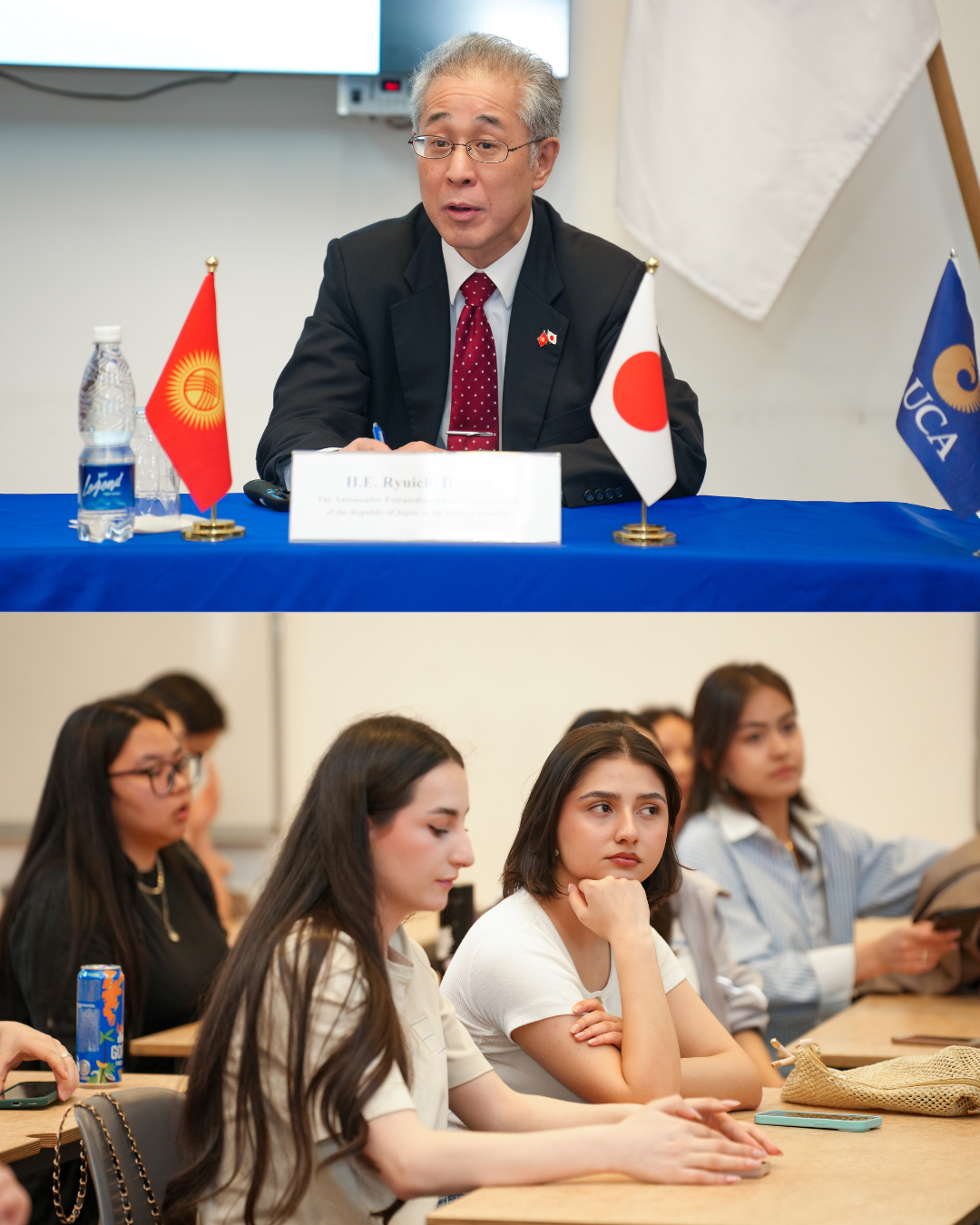
The Q&A session turned personal when ÂÌñ»»ÆÞ students asked the Ambassador about his career. Having served in both Russia and Australia, he offered a candid picture of diplomatic life — rewarding, demanding, and constantly shaped by events beyond anyone's control. His experience in Russia, particularly given post-2022 developments, was a vivid illustration of how quickly a posting can be transformed by geopolitics.
For students interested in following a similar path, Ambassador Hirano highlighted several concrete opportunities. Japan's MEXT government scholarships and JICA internship programmes are open to Kyrgyz students and offer a genuine entry point into both Japan and international affairs more broadly. Master's programmes at Japanese universities in fields like international relations and public policy were specifically recommended.
What the presentation ultimately conveyed is that Japan sees its engagement with countries like Kyrgyzstan not as peripheral, but as part of a broader strategic vision — one in which stable, rule-based international relations are built relationship by relationship, scholarship by scholarship, and project by project.
For ÂÌñ»»ÆÞ students, that vision comes with a practical takeaway: the opportunities are there. The question is whether to take them.
This article is based on a presentation delivered by Japan's Ministry of Foreign Affairs and a Q&A session with Japanese Ambassador Mr. Hirano, hosted by the ÂÌñ»»ÆÞ as part of its Ambassador Talks series.
Ìý